Key Takeaways
- Landfills are engineered to contain waste and protect the environment.
- Trash decomposition in landfills contributes to methane production.
- Sustainable practices in landfills can lead to renewable energy production.

Composition of Landfill Waste
In landfills, you’ll find a mix of decomposable organic substances and non-organic materials, each undergoing different processes. Here’s what you should know about the composition.Organic Materials in Landfills
Organic waste, which includes food scraps, yard waste, and paper products, decomposes under layers of other debris. This decomposition occurs due to bacteria thriving in the absence of oxygen. The result is landfill gas, predominantly composed of methane and carbon dioxide, which can be captured for energy use or needs to be managed to reduce greenhouse gas emissions.- Municipal Solid Waste (MSW): Typically containing significant organic material, the MSW you produce is a primary contributor to the organic portion of landfills.
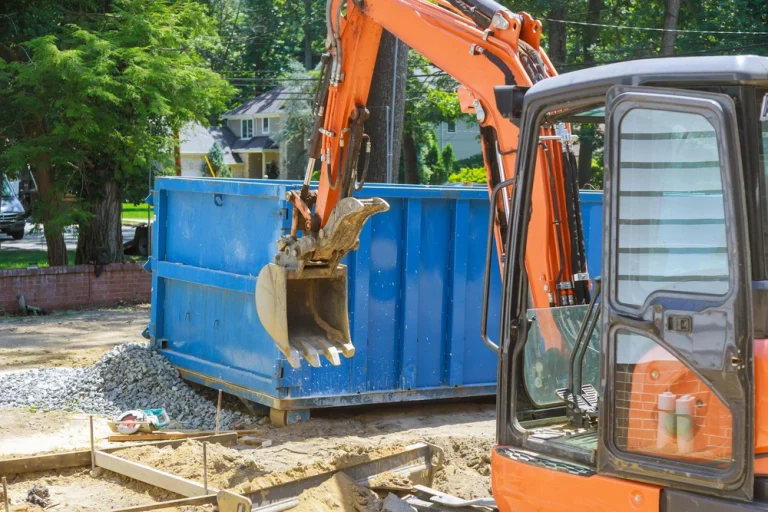
- Construction and Demolition Debris: Although primarily non-organic, this type of waste can also contain organic material like wooden structures or green waste from land-clearing projects.
Non-Organic Waste
Non-organic waste in landfills includes plastics, metals, electronics, and construction materials like concrete and bricks. Unlike organic materials, these items do not break down naturally:- Plastics: Your plastic waste can persist for hundreds of years without significant degradation. A portion of what you throw away gets compacted in the landfill, resisting decomposition and posing a longer-term environmental concern.
- Construction and Demolition Debris: Apart from wood and green waste, non-organic debris from construction sites like metal, glass, and concrete form a large volume of what ends up in the landfill.
Landfill Design and Operation Standards
In the United States, stringent design and operational standards govern how your trash is managed in landfills. These regulations, set by the U.S. Environmental Protection Agency, are vital for ensuring that landfills do not become a source of environmental contamination.Sanitary Regulations
Sanitary landfills are meticulously engineered to handle waste safely. You must be aware that these facilities are more than just dumpsites; they are constructed with layers of protection to prevent toxins from polluting the environment. Such landfills are required to have a bottom liner and must cover waste with daily layers of soil to minimize exposure to the elements and to reduce odors. The EPA monitors these sites to ensure compliance with federal standards, preventing the construction of landfills in environmentally-sensitive areas.Leachate Management
The threat of leachate, a liquid that forms when waste breaks down and water filters through that waste, is taken very seriously by landfill designs. Your landfill must include a system to collect and treat leachate, preventing it from contaminating groundwater. These systems typically involve a combination of drainage layers, collection networks, and treatment facilities. Many landfills incorporate synthetic liners with drainage pipes to capture and redirect leachate to a liquid waste treatment plant.Gas Collection Techniques
As organic materials in your landfill decompose, they generate gas, primarily consisting of methane and carbon dioxide. Efficient gas collection systems are crucial to harness this byproduct while also mitigating potential hazards and odor issues. Landfills often use a series of wells, pipes, and flares to collect and process this gas. The methods of gas collection are an integral part of landfill design, and the captured gas can be used to create renewable energy, showcasing a commitment to sustainable waste management practices.Environmental Impact
When you dispose of trash in a landfill, it has several significant impacts on the environment. From the release of potent greenhouse gases to the local ecosystem disruption due to pollution, understanding these effects is critical for assessing the broader implications on climate change and air quality.Greenhouse Gas Production
Landfills are a major source of greenhouse gas emissions, specifically methane, which is produced when organic waste decomposes anaerobically (without oxygen). Methane is up to 34 times more potent than carbon dioxide over a 100-year period. This contributes notably to climate change, as methane has the ability to trap heat in the atmosphere effectively. The EPA highlights the struggle to track methane emissions from landfills, which magnifies the challenge of managing their environmental impact.Pollution and Local Ecosystems
The influence of landfills on local ecosystems manifests in various forms of pollution. Toxins can seep into the ground, leading to contamination of soil and water sources, while odors and particulate matter can significantly reduce air quality. National Geographic suggests that modern landfills attempt to minimize these issues through design features aimed at containing toxic waste. However, leaks still occur, and the surrounding ecological and residential areas can suffer as a result.Decomposition and Methane Generation
 When you dispose of organic waste in a landfill, it undergoes a biological breakdown process. This process, dominated by the absence of oxygen, entails several stages that ultimately result in the generation of methane, a potent greenhouse gas.
Anaerobic Decomposition Process
Anaerobic decomposition is what happens to your trash when it lacks oxygen. As organic material, especially food waste, piles up in landfills, it’s buried and creates an environment devoid of air. Microorganisms thrive in these conditions and begin breaking down the waste. This decomposition is slow and leads to the production of volatile organic compounds and other byproducts, one of which is methane gas.Methane Production and Control
As your waste breaks down anaerobically, methane emissions are a significant consequence. Methane is many times more potent than CO2 as a greenhouse gas and poses serious environmental concerns. To manage this, landfills often utilize a series of wells and pipes to collect methane, which can then be burned off or harnessed as an energy source. While these controls are necessary, it’s important to note that not all methane can be captured; thus, reducing organic waste in landfills is vital for mitigating this issue.Climate Relevance of Landfills
In considering the impact of your daily waste, it’s important to recognize the significant role landfills play in climate change. They are not just the final resting place for trash, but a source of potent greenhouse gases.Role in Global Warming
Landfills are a key contributor to global warming due to the release of methane, a heat-trapping gas. When organic waste decomposes anaerobically (without oxygen), methane is produced. This gas is approximately 28 to 36 times more effective than carbon dioxide at trapping heat in the atmosphere over a 100-year period. Studies have measured methane emissions from landfills, revealing that they contribute significantly to the greenhouse gas emissions driving global warming. High-resolution plume maps have underscored the necessity to pinpoint these methane emission sources precisely, enabling targeted mitigation strategies. Learn more about these studies and their implications on landfills and climate change.Regulating Emissions
Efforts to regulate and reduce landfill emissions are underway, reflecting a growing awareness of their climate impact. Methane concentration limits and capture technologies are being implemented, which reduce the volume of methane released into the atmosphere. The Environmental Protection Agency (EPA), for instance, has been wrestling with tracking and managing these emissions effectively. Landfills with gas collection systems turn a portion of their emissions into energy, however, this recovery is not yet universal. A deeper dive into the regulation challenges is available on a recent EPA-related discussion.Waste Management Practices
When you dispose of your trash, it’s managed through various practices aimed at sustainability and efficiency. These practices include recycling and composting, which significantly reduce the burden on landfills.Recycling and Its Impact
Recycling turns materials that would otherwise become waste into valuable resources. By separating materials like paper, glass, and plastic from your trash, you contribute to a circular economy. This process not only conserves natural resources but also reduces the need for landfill space. A substantial amount of municipal solid waste is recyclable. For instance, recycling rates for paper and paperboard are notably high, highlighting the impact of recycling programs.Key Points:- Recycling reduces landfill waste.
- Supports resource conservation.
- Encourages the development of a circular economy.
Composting Organic Waste
Composting is the natural process of recycling organic matter, such as leaves and food scraps, into a valuable fertilizer that can enrich soil and plants. By composting your organic waste, you help cut greenhouse gas emissions and extend the lifespan of landfills. Between 25 to 50% of total waste can be composted. Thus, implementing compost strategies is a critical aspect of efficient landfill waste reduction.Key Points:- Composting organic materials reduces methane emissions from landfills.
- It plays a significant role in waste management and sustainability.
- Enhances soil quality, contributing to a greener environment.
Renewable Energy from Landfills
 Landfills are more than just waste storage sites; they are potential energy generators. As organic waste decomposes, it produces methane, a gas that can be harnessed to create renewable energy.